A photo filter changes pixels. A car drawing rebuilds decisions
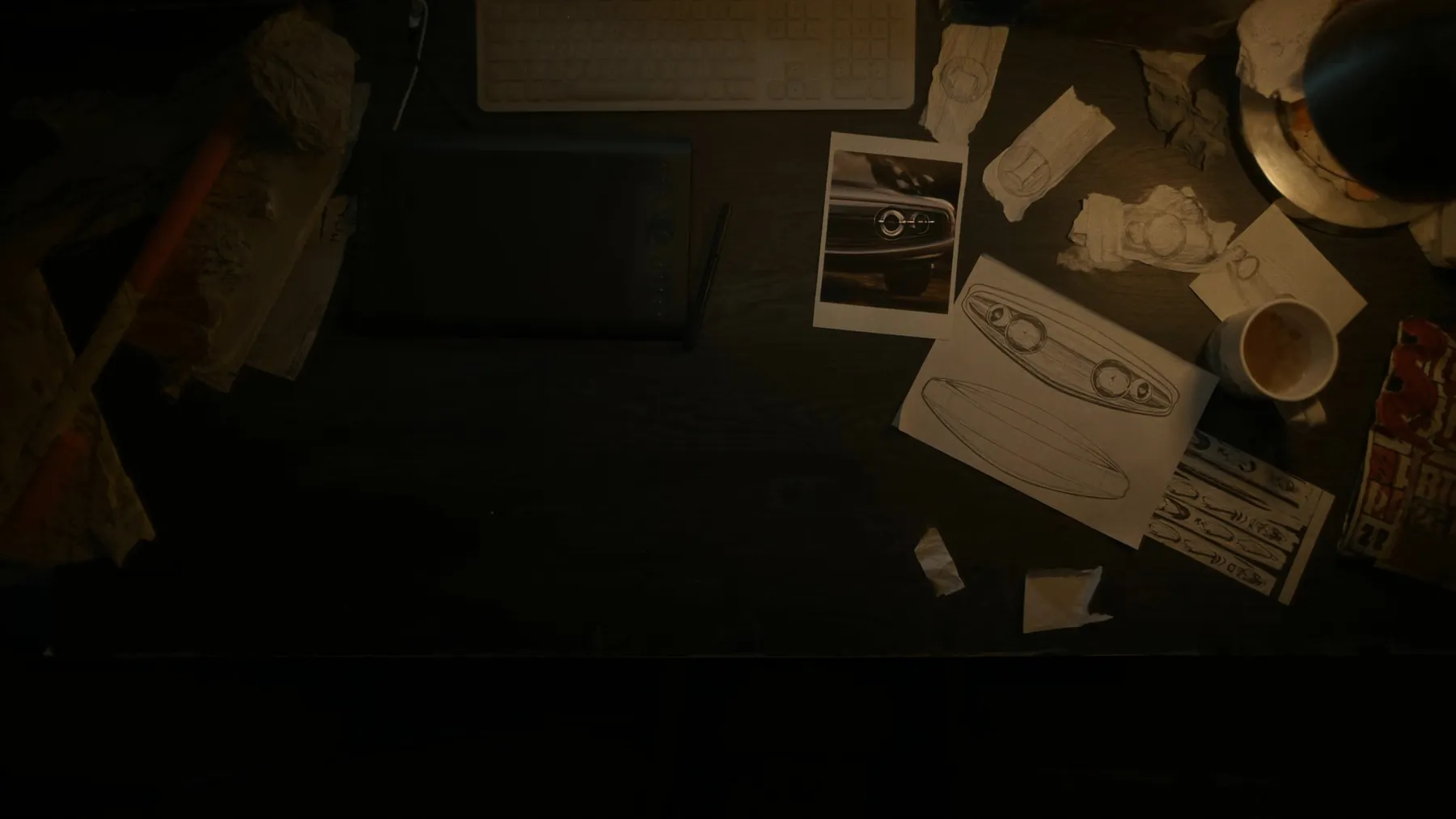
In short
- A filter remains tied to the source photograph’s angle, light and hidden areas.
- A layered drawing separates linework, paint, shading, lights and registration.
- Neither method can recover a wheel, badge or body part that the reference never shows.
The word digital describes the tool, not the method. A filter begins and ends with one image. I redraw the car into parts that can be checked and changed, while keeping the limit of what the references actually prove.
Is a digital car illustration a photo filter?
No. A filter changes existing pixels. A layered illustration rebuilds the car as editable linework, paint, shadows, lights and identity details.
The full drawing process follows those parts from reference to print file.
What does a photo filter keep from the original image?
It keeps the original angle, perspective, lighting, hidden areas and pixel resolution. An effect may disguise those limits, but it does not remove them.
| Question | Photo filter | Layered drawing |
|---|---|---|
| Edges | Derived from existing pixels | Redrawn as linework |
| Paint | Shifted with original light baked in | Colour sits under separate shading |
| Hidden detail | Still hidden | Needs another reference |
| Registration | Part of the photograph | Separate checked detail |
What does the drawing rebuild?
The drawing separates the visible structure into decisions: outlines, panel shading, glass, lights, wheels, paint and registration. Each can be reviewed without asking one photograph to do every job.
This is why the reference-photo check asks for several views rather than one dramatic shot.
What can neither a filter nor a drawing know?
Neither can know a hidden or unreadable detail without evidence. Drawing software can make an invention look convincing, which is exactly why an unknown must stay unknown.
A custom request uses photographs of the actual car and asks for missing views before a plausible standard part is substituted.
What happens when the drawing loses its shading layers?
The panels flatten because one colour can no longer keep the drawn relationships between light and dark. Change the control to see why a paint swap is not enough on its own.
Open a reviewed catalogue drawing to change its paint and registration.
Questions people actually ask
- Is a digital car illustration just a photo filter?
- No in this shop. Jonathan draws the car in layered Photoshop artwork, separating linework, paint, shadows and details. A filter transforms pixels that already exist in one photograph.
- What can a photo filter change?
- A filter can alter colour, contrast, texture and edge appearance, but it remains tied to the source photograph’s viewpoint, lighting, occlusion and resolution. It does not establish hidden parts.
- Why are layers useful in a car illustration?
- Layers let linework, paint, shading, lights and registration keep separate jobs. That is why the same reviewed drawing can change paint without flattening every panel into one colour.
- Can a digital artist draw details missing from the photograph?
- Only with other reliable evidence. Digital tools do not reveal a hidden wheel, badge or bumper. If another photograph or document cannot establish it, the detail should remain unresolved.
Written by Jonathan in Derby. Last updated .