In short
- Northern Ireland registrations use a separate series from the age-coded formats issued in Great Britain.
- The established NI pattern uses letters containing I or Z followed by up to four numbers.
- An ordinary NI registration is dateless and does not reveal the vehicle's age.
- The registration must still be displayed with the legal typeface, spacing, size and reflective grounds that apply to UK plates.
Northern Ireland registrations normally use two or three letters containing I or Z followed by up to four numbers, such as AAZ 1234. They do not contain the age code used on current Great Britain plates, so an NI registration cannot tell you when the car was first registered.
How do Northern Ireland number plates work?
Northern Ireland uses a separate dateless registration series. The familiar pattern places two or three letters containing I or Z before up to four digits. Those digits are a sequence, not a year, so the plate cannot date the car.
That makes an NI registration look older or more private than a current GB plate, but appearance is not evidence of the vehicle’s age. Read the registration as an identifier and use the V5C, MOT record and manufacturer information for dates.
What is the Northern Ireland number plate format?
The established NI format is an index mark of two or three letters, including I or Z, followed by a number of up to four digits. AAZ 1234 shows the shape. It is not decoded in the same three-part way as AB12 CDE.
The space separates the letter group from the number group. The letters come from an allocated Northern Ireland series and the digits advance within it. That is why reading 23 in an NI plate as a 2023 age identifier produces a false answer. The number may happen to resemble a year without carrying the GB scheme’s meaning.
DVLA’s current fixed-price NI pages show three-letter combinations such as IAZ, IEZ and IXZ followed by digits. Historical marks can be shorter, and a real registration should always be copied from its V5C rather than reconstructed from a remembered format.
Why do Northern Ireland registrations use I and Z?
I and Z belong to the Irish registration tradition and became the lasting visual clue in Northern Ireland index marks. Historical Northern Ireland regulations list local series such as IA, DZ, BZ and JZ, and current DVLA NI sales continue to use combinations containing those letters.
The letters were once tied to issuing areas. A 1946 Northern Ireland schedule, for example, lists groups for Antrim, Armagh, Down, Fermanagh, Londonderry, Tyrone, Belfast and Londonderry county borough. Series have continued and expanded since then, so an old county list should not be used as a complete current decoder.
Treat I or Z as a recognition clue rather than permission to invent a location. The registration itself identifies the vehicle in DVLA records. If a locality matters to research, use the official record and period allocation material for that exact mark.
Why does an NI number plate not show the car's age?
The NI series has no dedicated year character or pair. Its numbers identify a place in the series, unlike the first letter of a GB prefix plate or the middle two digits of a current GB plate.
Great Britain added a suffix year letter in 1963, moved it to the front in 1983 and adopted the current two-digit age code in 2001. Northern Ireland did not follow that sequence. Its ordinary marks therefore sit beside those systems rather than forming another stage within them.
Dateless does not mean ancient. It means the registration does not encode a date. A modern vehicle can carry an NI registration and an older vehicle can carry one that was assigned later, subject to DVLA assignment rules. The plate cannot make either car’s age knowable from its characters.
Use the official MOT history service and the V5C when age matters. The plate-age guide explains why a decoder must return no age for a dateless mark.
How is a Northern Ireland plate different from a Great Britain plate?
The current GB format has two memory-tag letters, a two-digit age identifier and three random letters. An NI mark groups its letters before a serial number and has no age identifier. The two formats therefore answer different questions.
| System | Example shape | Letter group | Number group | Shows age? |
|---|---|---|---|---|
| Northern Ireland | AAZ 1234 | NI index series containing I or Z | Serial within the series | No |
| Current Great Britain | GM26 SNP | DVLA memory tag, then random letters | Two-digit age identifier | Yes |
| Prefix Great Britain | A123 BCD | Opening letter is the age code | Serial digits | Yes |
| Older GB dateless | ABC 123 | Historic issuing-area series | Serial digits | No |
The complete UK formats guide places these systems on one timeline. The important correction is that Northern Ireland is a parallel series, not the seventh Great Britain format.
Do Northern Ireland plates follow different display rules?
The registration format differs, but the plate must still display the assigned characters correctly and comply with the applicable UK rules for character form, spacing, size, reflective material and front or rear ground colour.
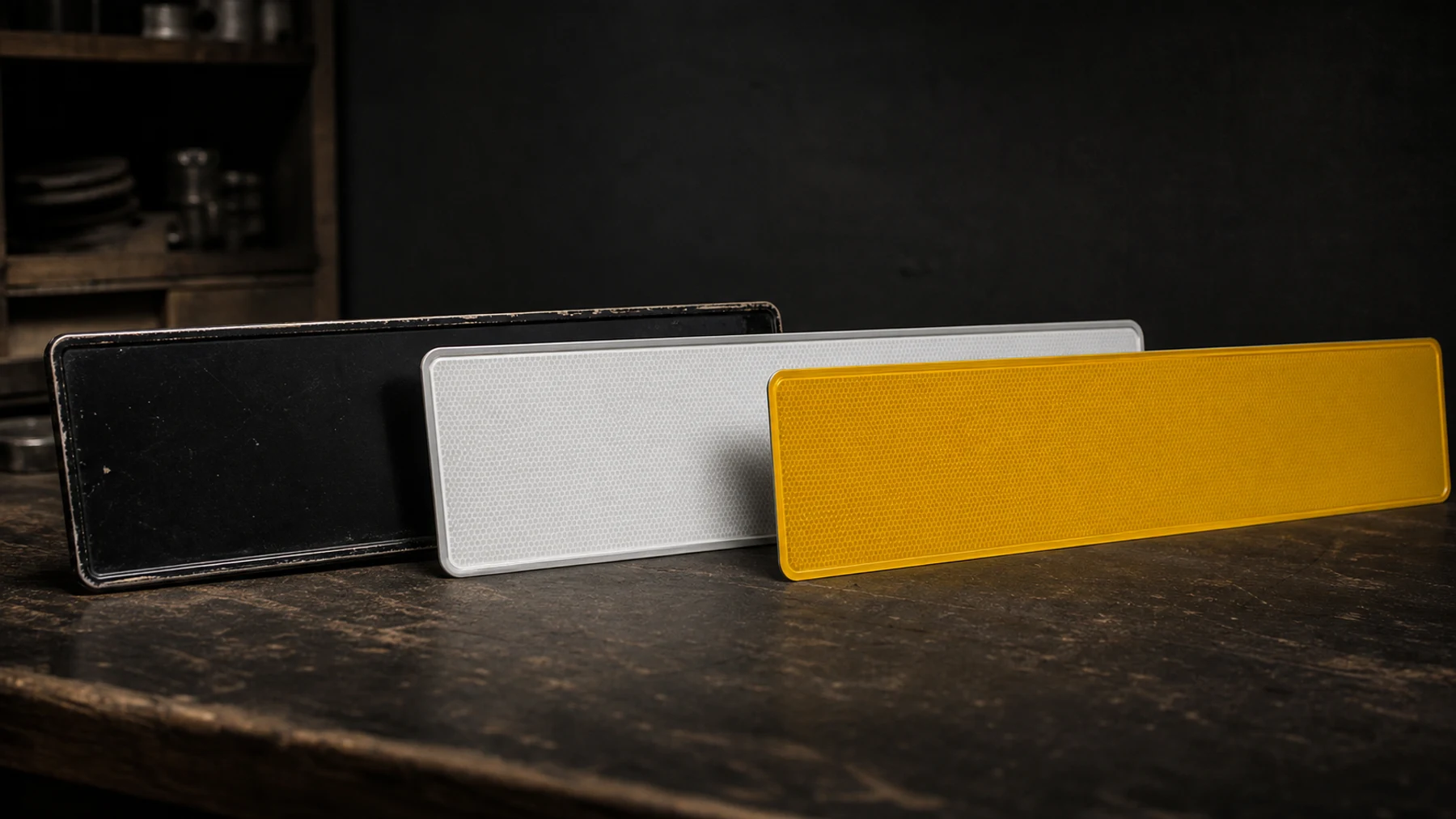
GOV.UK says number plates must show the registration correctly and may not have characters rearranged or altered to make them difficult to read. The front plate uses a white reflective ground and the rear uses yellow for modern vehicles. The rules also cover the prescribed character typeface, dimensions and spacing.
An NI registration is not permission to close a gap so the letters suggest a word. Nor does its dateless status automatically permit black and silver plates. That separate display option depends on the vehicle and historic tax-class rules, as explained in the traditional plate guide.
Can an NI registration be transferred to another UK vehicle?
Many NI registrations can be assigned and transferred through DVLA, but the V5C and entitlement document decide the individual case. DVLA says a mark shown as non-transferable cannot be retained or transferred, and Q or QNI marks must stay with the vehicle.
DVLA sells a selection of NI dateless registrations through its own personalised registration service. Buying a registration gives the right to assign it under the scheme, not ownership of the characters as free-standing property. The vehicle, entitlement and current transfer conditions still have to qualify.
Check the latest INF46 registration guidance before moving a mark. This article records the format and the boundary, but it does not replace a live DVLA decision on one plate.
How should a Northern Ireland plate appear on a car print?
Copy every letter and digit from a clear photograph or document, keep the two groups in the right order, and use the correct front or rear plate ground. Do not insert a made-up age meaning or respell the mark to fit a GB pattern.
The builder accepts the registration as an identifying string. It does not need to pretend the digits are a year. The same plate renderer draws the browser preview and print file, using outlined characters rather than relying on a font installed by a printer or browser.
Type the spacing as it appears in the evidence and check the preview character by character. An I can resemble a 1 at a glance, which is particularly relevant on NI marks. Open the builder only after the complete registration has been confirmed.
I copy a registration character by character because one confident substitution gives the print another vehicle’s identity. NI marks make that ordinary check more important, not more complicated.
What are the official sources and limits?
Current DVLA personalised-registration pages demonstrate NI dateless series, INF46 governs assignment and transfer boundaries, and GOV.UK supplies display rules. Historical legislation supports the I and Z area-mark history. None can date a car from an ordinary NI registration because the format contains no age code.
See the DVLA NI fixed-price registration search, the current INF46 leaflet and GOV.UK display guidance. The 1946 Northern Ireland index-mark schedule records the historical local series.
Rules and DVLA services can change. The linked government pages are the live check for a transfer, entitlement or display decision. This post does not identify the age, history or legal status of an individual vehicle.
Questions people actually ask
- What is the Northern Ireland number plate format?
- The established Northern Ireland format uses two or three letters containing I or Z, followed by up to four numbers. AAZ 1234 is the shape used in this site's plate guide. The exact letters belong to an allocated series and should be copied from the vehicle record.
- Do Northern Ireland number plates show the age of a car?
- No. Ordinary Northern Ireland series do not contain an age identifier. The digits are a serial number, not the March or September year code used in the current Great Britain format, so use the V5C and vehicle history to establish age.
- Why do Northern Ireland plates contain I or Z?
- I and Z were allocated within the Irish registration system and remain the useful visual clue in Northern Ireland series. Historical Northern Ireland legislation lists local index marks built around those letters, while current DVLA NI registration sales still show them.
- Can a Northern Ireland registration be used in Great Britain?
- Northern Ireland registrations sit within the UK registration system and DVLA sells NI dateless series. Assignment and transfer still depend on the registration document and vehicle eligibility. A Q or QNI registration is different because DVLA says it cannot be transferred.
Written by Jonathan in Derby. Last updated .