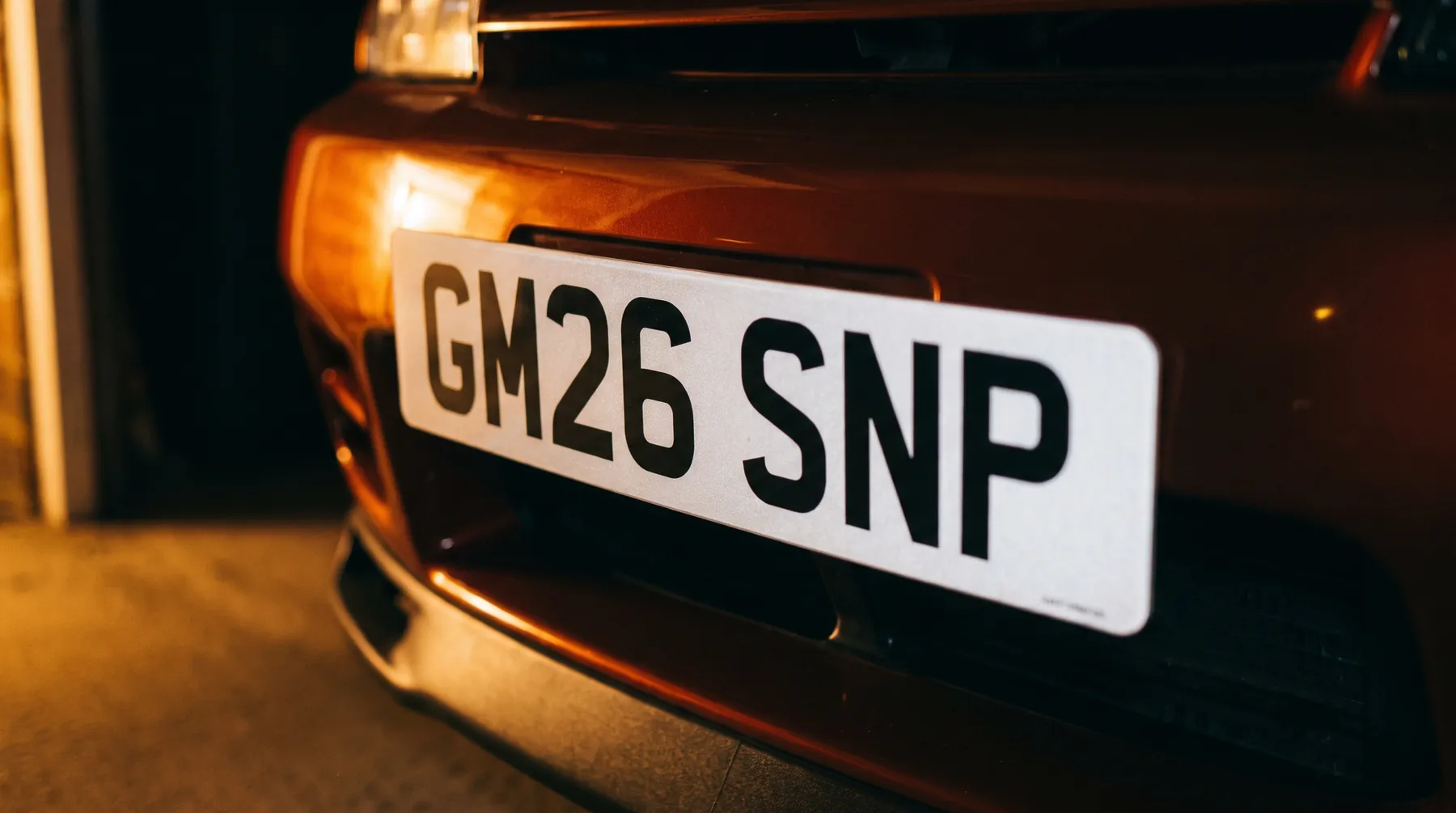
UK front plates are white and rear plates are yellow because the rules say so
In short
- A modern front plate uses black characters on a reflective white background. A modern rear plate uses black characters on reflective yellow.
- The registration mark does not change between front and rear. Only its prescribed plate background changes with position.
- The white and yellow backgrounds form part of the visibility and identification system. They are not colour options for the owner.
- Eligible pre-1980 vehicles can use historic black plates, while motorcycles normally display only a rear plate under current rules.
The short answer is law, not taste. Britain standardised reflective plates with white at the front and yellow at the rear. The colours help reveal which way a vehicle faces, but they are not an invitation to recolour a legal plate around the car’s paint.
Why are UK front number plates white and rear plates yellow?
Great Britain’s display rules require black registration characters on a reflective white background at the front and a reflective yellow background at the rear. The different backgrounds also make vehicle direction immediately legible. The same registration mark appears at both ends.
The direction cue is a practical consequence of the scheme. The regulation itself prescribes construction, character and background requirements rather than offering a design essay about colour psychology.
A registration is the letters and numbers assigned to the vehicle. The plate is the physical display. Moving from front to rear does not create a different registration, even though the legal background changes from white to yellow.
This article covers Great Britain’s current display guidance and the history behind the modern colour pair. Northern Ireland has its own registration system, but modern plate display still uses the familiar front and rear colours.
What are the current front and rear number-plate colour rules?
A modern plate must use black characters on white at the front and black characters on yellow at the rear. It must be reflective, have no background pattern and meet the applicable British Standard, supplier marking, character, spacing and condition requirements.
The current GOV.UK rules for number plates list the colour pair directly. Plates fitted after 1 September 2021 carry BS AU 145e and their characters must be a single shade of black.
| Position | Characters | Background | Registration |
|---|---|---|---|
| Front | Black | Reflective white | Same assigned mark |
| Rear | Black | Reflective yellow | Same assigned mark |
| Trailer rear | Black | Reflective yellow | Matches the towing vehicle unless separately registered rules apply |
The characters themselves must not be reflective. The background supplies the retroreflective surface while the dark characters remain legible against it.
Colour compliance does not rescue bad spacing, an altered font or a patterned background. The legal spacing guide and number-plate typeface guide cover those separate checks.
Do the white and yellow colours show which way a vehicle is facing?
Yes, as a practical reading cue: white marks the front and yellow marks the rear under the modern scheme. That lets another road user or observer infer vehicle direction when the plate background is visible, even before reading the registration.
It is better to describe this as a consequence than to invent it as the only documented reason the law chose the colours. The current rule says what must be displayed. Historical regulations introduced position-specific reflective backgrounds.
The cue works in daylight and when illuminated because the backgrounds are reflective and distinct. It does not replace required vehicle lights, and it is not a substitute for reading the road position safely.
Automatic number plate recognition also depends on readable plate construction and contrast. The current MOT manual warns that fixings or delamination can interfere because non-reflective material may be read as black.
A black-and-white photograph removes much of the colour cue, which is another reason an identification should use the plate’s position and the complete vehicle rather than colour alone.
When did white front and yellow rear number plates begin?
Regulations made in December 1967 permitted reflex-reflecting registration plates with black on white at the front and black on yellow at the rear. The modern reflective scheme became the required form for vehicles first registered from 1 January 1973, subject to later standards and amendments.
The 1967 amending regulations added the option to display a reflex-reflecting plate. They named the front white and rear yellow backgrounds and the then-current British Standard.
The Road Vehicles (Display of Registration Marks) Regulations 2001 consolidated later requirements and retain date-dependent alternatives. Standards have continued to change, including the BS AU 145e requirement for plates fitted after 1 September 2021.
“When did yellow plates start?” therefore has two useful dates: 1967 for permission in the regulations and 1 January 1973 for the new-vehicle change usually meant by the question.
An older vehicle’s current eligibility for black and silver is not decided solely by the year its original plate happened to be replaced. The manufacture-date rule and current guidance need checking.
Why must modern number-plate backgrounds be reflective?
Modern plates use retroreflective material so light returns towards its source and the registration remains visible under illumination. The black characters are not reflective, preserving contrast against the white or yellow background.
Retroreflection is not the same as a mirror finish. A compliant plate must meet a British Standard that covers more than colour, including performance and durability requirements. A home-cut sheet that looks reflective is not therefore a compliant number plate.
The supplier and standard markings matter. Current GOV.UK guidance says plates must show who supplied them and the applicable British Standard number.
Damage can reduce legibility. Delamination, dirt, fixings and coatings should not turn characters into different shapes or interfere with recognition. The MOT inspection manual treats obvious failures as defects.
Do not coat a plate to change its camera appearance. The legal task is ordinary human and machine readability, not defeating observation.
Which older vehicles can use black and silver number plates?
Current GOV.UK MOT guidance allows white, grey or silver characters on a black background only on eligible vehicles manufactured before 1 January 1980. Check the current registration and display rules for the individual vehicle before fitting them.
The date is manufacture, not the apparent age of a private registration. A dateless plate does not make a newer vehicle historically eligible. The black and silver plate guide owns the eligibility decision in detail.
An eligible owner can still use modern reflective plates. The historic style is an option under the relevant rules, not an obligation to make every old car look period.
Do not use black plates simply because the car is called classic, tax-exempt or restored. Those labels and schemes do not all share one boundary.
For artwork, a historic plate can be reproduced as a visible detail when the vehicle and reference support it. That visual choice does not manufacture or certify a legal road plate.
How do the colour rules apply to motorcycles and trailers?
Modern motorcycles and motor tricycles normally display a yellow rear plate only. Machines registered before 1 September 2001 may also display a front plate but do not have to. A trailer normally displays the towing vehicle’s registration on yellow at the rear.
GOV.UK says motorcycles and motor tricycles registered on or after 1 September 2001 must only display a rear number plate. Their registration is usually laid out over two lines.
A front motorcycle plate is therefore not missing from a modern bike. Applying the car rule without the vehicle-type exception would create the wrong answer.
A trailer’s rear plate normally repeats the towing vehicle’s registration. Separately registered commercial or heavy trailers used abroad can have additional requirements, so follow the official trailer guidance for that use.
The yellow rear colour remains the directional clue on both examples. The number and layout rules depend on the vehicle and registration system.
Can you choose different plate colours, patterns or decorative backgrounds?
No ordinary owner colour choice replaces the prescribed modern white front and yellow rear backgrounds. Plates must not have a background pattern. Only permitted flags, identifiers, a qualifying green flash and compliant borders or raised characters can be added within their rules.
A body-coloured plate, tinted cover or patterned carbon-look background may make the registration harder to read and does not satisfy the plain prescribed background requirement merely because the characters remain black.
The flag and identifier guide lists current permitted national options. The green-flash guide explains the optional zero-tailpipe identifier.
Raised 3D characters can be permitted, but the complete plate still needs the correct background, character form and standard. Decorative licence-plate products that are not road plates should not be represented as compliant.
Use a registered number-plate supplier and bring the original identity and entitlement documents required by the current official route.
Why do Greasemonkey Prints cars show a white front plate?
Every live catalogue car is drawn from the front, so the standard personalised plate uses the modern white front treatment. The registration field creates artwork, not a physical road plate, and historic or specialist details require an accurate reference and suitable custom review.
The same rendering path creates the preview and print file. The plate text entered in the builder is therefore the one used for output. It is still an inscription on a poster, not a DVLA assignment or entitlement check.
Jonathan’s older finished portraits sometimes showed other plate treatments. The website deliberately standardised front plates to white unless an exact vehicle and commission justify another visible detail.
Keep the characters in their true order. A poster field can preserve the registration without copying illegal spacing or turning a plate into a claim about age.
If the car uses an eligible historic plate, green flash, legal flag or unusual physical placement that matters to the portrait, send a square front photograph through the custom request.
Which sources and review date support this plate-colour guide?
Current colour, material and vehicle-type rules come from GOV.UK and the DVSA MOT manual. The 1967 and 2001 regulations establish the historical and legal structure. These sources were reviewed on 9 August 2026.
The primary current source is GOV.UK’s plate-rules page. The DVSA identification manual, updated 1 June 2026, records the MOT application and historic threshold.
The 1967 instrument shows the original reflective colour option. The 2001 regulations provide the later consolidated framework.
Rules can change. Use the linked official guidance before buying or fitting a road plate. The print builder is a visual personalisation tool and does not certify legal manufacture.
Questions people actually ask
- Why are UK front number plates white and rear plates yellow?
- Current Great Britain rules prescribe black characters on a reflective white background at the front and reflective yellow at the rear. The colour difference also provides an immediate visual direction cue, but the legal basis is the required position-specific scheme.
- Can a front number plate be yellow in the UK?
- Not as the ordinary modern front registration plate. Current GB rules require black characters on white at the front and black on yellow at the rear. Historic vehicles and certain vehicle types have separate provisions, so check the exact rule before changing a plate.
- When did reflective white and yellow number plates start in Britain?
- Regulations in 1967 permitted reflex-reflecting plates with white at the front and yellow at the rear. From 1 January 1973, the modern reflective scheme applied to newly registered vehicles, while older vehicles retained relevant alternatives.
- Do motorcycles need a white front number plate?
- Modern motorcycles do not. Motorcycles and motor tricycles registered on or after 1 September 2001 must display only a rear plate. Older machines may display a front plate but do not have to under current GOV.UK guidance.
Written by Jonathan in Derby. Last updated .